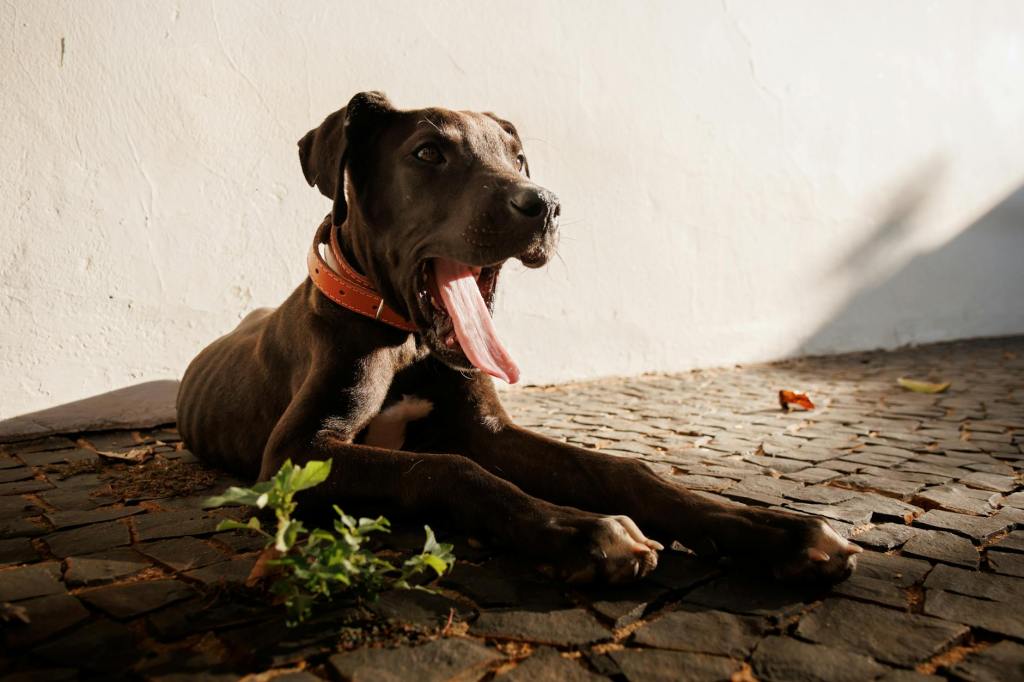
Training a Great Dane puppy requires patience, consistency, and understanding of their unique temperament. Despite their massive size, Great Danes are intelligent and eager to please, making them highly trainable when approached with positive reinforcement methods. This beginner’s guide covers everything you need to know about how to train a Great Dane puppy during the critical first year.
Great Dane puppies are naturally affectionate and responsive to their owners’ feedback. These gentle giants want to make you happy, which works in your favor during training. However, their size means that allowing bad habits to develop during puppyhood becomes problematic in adulthood. A 100-pound adult Great Dane jumping on guests is far more dangerous than a small puppy exhibiting the same behavior, making early training absolutely essential.
Starting Early: Foundation Training Principles
Begin training your Great Dane puppy immediately upon bringing them home, ideally starting at 8 weeks of age. Early training establishes you as a calm leader and prevents behavioral problems from developing. The key to successful Great Dane puppy training is consistency, patience, and positive reinforcement.
Always use reward-based training methods exclusively. Great Danes respond poorly to harsh corrections, intimidation, or punishment-based techniques. These approaches damage your relationship and can create fearful or aggressive dogs. Positive reinforcement—rewarding desired behavior with treats, praise, or play—builds trust and enthusiasm for training.
Keep training sessions short and frequent. Puppies have limited attention spans, so five to ten-minute sessions work better than lengthy training periods. Multiple brief sessions daily (four to five) are ideal. End sessions on a positive note while your puppy is still engaged and successful.
Essential Commands for Great Dane Puppies
Start with foundational commands that ensure safety and control: sit, stay, down, come, and leave it. These five commands form the basis for all advanced training and are absolutely essential for managing a dog the size of a Great Dane.
Teach sit first, as it’s the easiest command and builds confidence. Hold a treat close to your puppy’s nose and move it toward their head. As their head follows the treat upward, their bottom naturally lowers. The moment their rear touches the ground, say “sit,” give the treat, and praise enthusiastically. Repeat ten times daily until your puppy reliably sits on command.
Stay teaches impulse control and prevents dangerous situations. Begin with very short durations (just a few seconds). Ask your puppy to sit, then hold your palm up and say “stay.” Step back one foot, count to five, return, reward, and release. Gradually increase duration and distance as your puppy succeeds.
Come is perhaps the most important safety command. Practice in controlled environments initially. Run backward excitedly, call your puppy’s name followed by “come,” and reward enthusiastically when they reach you. Never chase your puppy or appear angry when they come, as this teaches them to avoid you.
Down is the foundation for impulse control and relaxation. From a sitting position, hold a treat to the floor in front of your puppy’s paws. As they lower themselves, say “down,” reward, and praise. This command prevents jumping, wild behavior, and helps your growing Great Dane learn self-control.
Leave it protects your puppy from dangerous items. Hold a treat in your closed fist near your puppy. When they stop trying to get it, say “leave it,” open your hand to show the treat, then give them a different reward from your other hand. This teaches discrimination between items to leave and items allowed.
House Training Your Great Dane Puppy
House training (housebreaking) a Great Dane puppy requires consistency and patience. Puppies can’t control their bladders until about 4 months old, so expect accidents. The goal is establishing a routine and praising outdoor elimination.
Take your puppy outside frequently: first thing in the morning, after meals, before bed, after playtime, and after training sessions. Young puppies can hold their bladder approximately one hour per month of age, so a three-month-old puppy needs to go outside every three hours. Never punish accidents indoors, as this creates confusion and fear around elimination.
When your puppy eliminates outside, immediately praise enthusiastically and reward with treats. This positive association teaches them that outdoor elimination earns rewards. Use a consistent command like “go potty,” and eventually your puppy will eliminate on command.
Crate training facilitates house training. Dogs naturally avoid soiling their sleeping area, so a properly-sized crate helps teach bladder control. Never use the crate as punishment. When you can’t supervise, place your puppy in the crate or a small confined area with puppy pads. Gradually extend the time your puppy can remain crate-free as bladder control improves.
Watch for pre-elimination behaviors like circling, sniffing, or whining. When you notice these signs, immediately take your puppy outside. Once your puppy reliably eliminates outside, you can begin removing those pre-elimination signals through training.
Addressing Common Behavioral Issues
Nipping and mouthing are normal puppy behaviors but require redirection. When your puppy mouths you, yelp loudly to startle them, then redirect their mouth toward an appropriate toy. Reward when they chew the toy instead of your hands. This teaches mouth inhibition and appropriate chewing.
Jumping is another natural puppy behavior that becomes problematic in an adult Great Dane. Never reward jumping by giving attention, even negative attention. When your puppy jumps, turn away and ignore them. Only give attention and rewards when all four paws are on the ground. Teach a solid sit command and reward sitting rather than jumping when greeting people.
Excessive barking should be addressed calmly. Identify the trigger (asking to go out, seeking attention, response to noise) and address that underlying need. Never yell at a barking puppy, as this often increases barking. Instead, identify and eliminate the trigger, or teach your puppy an appropriate alternative behavior.
Destructive chewing usually indicates boredom or teething. Provide appropriate chew toys and rotate them regularly to maintain interest. Supervise your puppy carefully and redirect chewing toward appropriate items. Provide safe outlets like Kong toys stuffed with frozen treats, which provide mental stimulation and occupy your puppy constructively.
Leash Training and Walking
Begin leash training indoors or in a secure area before venturing into public spaces. Allow your puppy to wear a collar and lightweight leash while playing indoors, so they become comfortable with the sensation. Once your puppy accepts the collar and leash, practice short walks in quiet environments.
Use a front-clip harness rather than a neck collar for Great Dane puppies. Front-clip harnesses reduce pulling and prevent neck strain on growing dogs. Never use retractable leashes for puppies, as these allow too much autonomy and can create pulling behaviors.
Teach loose-leash walking by rewarding your puppy for walking near your side without tension. If your puppy pulls, stop walking and wait until the leash relaxes, then resume. This teaches that pulling doesn’t work but walking calmly rewards forward progress. Some trainers recommend carrying high-value treats to reward frequent check-ins with you rather than ahead on the leash.
Socialization During Training
Combine training with structured socialization. Puppy kindergarten classes (at 10-12 weeks, after partial vaccination) provide excellent opportunities to practice training commands while exposing puppies to diverse people and dogs.
Train your puppy to accept handling by different people. Let friends and family members touch your puppy’s paws, ears, mouth, and body. Reward calm acceptance and practice basic commands with different people. This teaches your puppy that good behavior works regardless of who’s asking.
Introduce your puppy to various environments, sounds, and surfaces during training walks. Practice sit, stay, and leave it in different locations. This teaches that training commands apply in all contexts, not just at home.
Working with Professional Trainers
Consider hiring a certified professional dog trainer for guidance, particularly if you’re a first-time Great Dane owner. Look for trainers certified by the Certification Council for Professional Dog Trainers (CCPDT) who use only positive reinforcement methods.
Avoid trainers who use punishment, dominance theory, or aversive equipment. These methods damage your relationship with your Great Dane and can create behavioral problems. The most successful Great Dane trainers understand the breed’s sensitive nature and use reward-based methods exclusively.
Many trainers offer puppy kindergarten classes where puppies learn in a group setting while owners learn training principles. These classes are valuable for first-time dog owners and provide real-time feedback on your training approach.
Advanced Training and Trick Work
Once basic commands are solid (typically by 4-5 months), introduce advanced training. Trick training provides mental enrichment and strengthens your bond. Advanced commands like leave it with impulse control challenges, place (going to a specific spot), and settle (relaxing on a mat) are invaluable for adult Great Danes.
Consider canine sports like agility or obedience competitions if your Great Dane shows interest. These activities provide mental and physical stimulation while strengthening your relationship. Even modest training goals like completing a basic obedience title provide structure and motivation for consistent training.
Teaching your Great Dane to settle on a mat provides lifelong benefits. This command allows your dog to relax while you work, eat, or entertain guests. Begin by rewarding your puppy for sitting on a mat, gradually extending duration before releasing them.
FAQ
Q: When should I start training my Great Dane puppy?
A: Begin training immediately when your puppy comes home, ideally at 8 weeks. Young puppies are eager to learn and form habits quickly. Early training prevents behavioral problems and establishes your relationship as a leader.
Q: What’s the best reward for Great Dane puppy training?
A: Use what motivates your individual puppy. Some prefer small treats, while others are toy-motivated or respond to enthusiastic praise. Rotate rewards to maintain novelty and enthusiasm for training.
Q: How long does it take to fully house train a Great Dane puppy?
A: Most Great Dane puppies are reliably house trained by 4-6 months with consistent training. However, complete reliability may take up to a year. Patience and consistent routine are key.
 Lake Shore Great Dane Club Blog
Leave a comment